Oregon Cannabis Regulatory Update: Key Changes Taking Effect
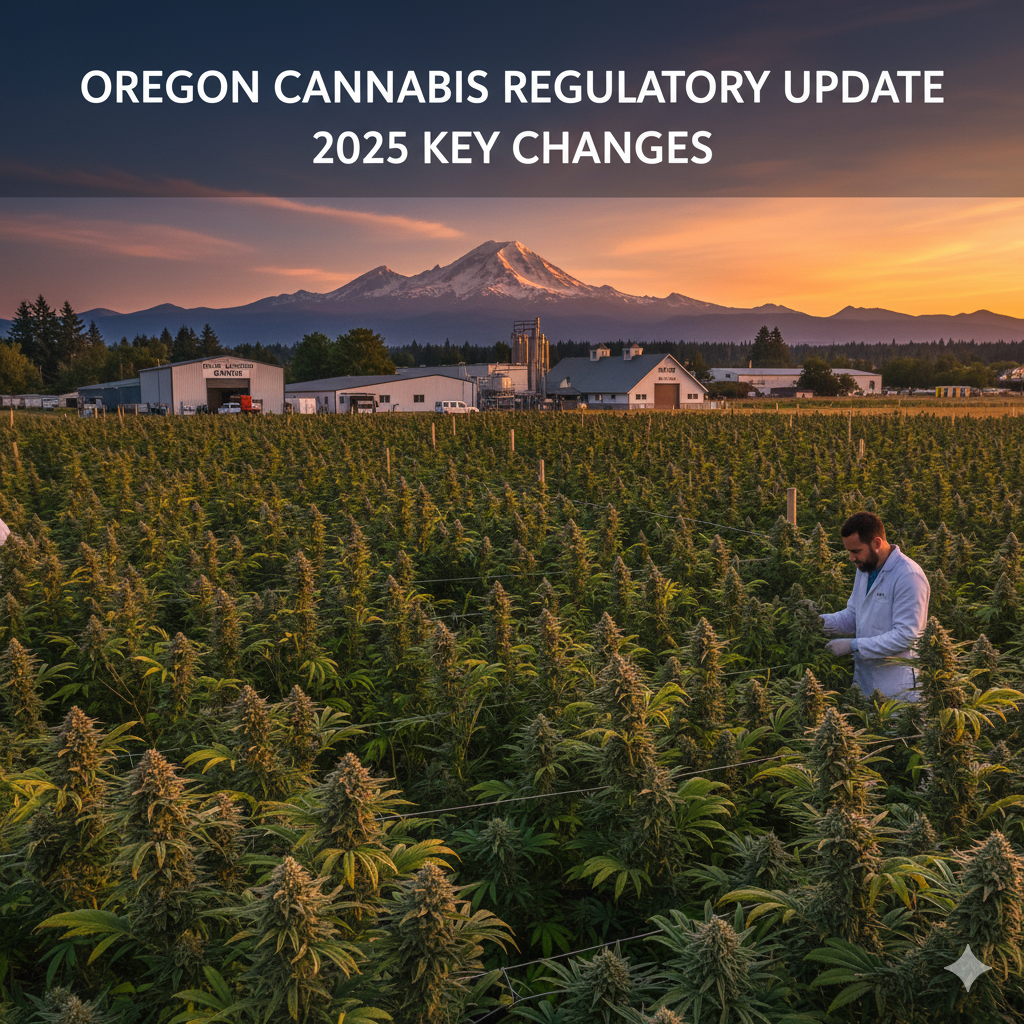
The Oregon Liquor and Cannabis Commission (OLCC) recently filed notice of proposed rulemaking to implement significant updates stemming from the 2025 legislative session, alongside crucial technical adjustments aimed at improving clarity and operational flexibility for licensees.
Whether you’re a long-time licensee or an applicant navigating the process, here is a detailed breakdown of the proposed changes that could impact your business, categorized by their legislative source and administrative intent.
Part 1: Legislative Mandates: New Rules from the 2025 Session
A large portion of the proposed amendments comes directly from three key Senate Bills passed by the Oregon Legislature in 2025.
Senate Bill 907: Notarized Property Owner Consent
SB 907 introduces a critical new documentation requirement for production and processing licenses.
- New Requirement: Applicants for a producer or processor license must submit notarized consent from the property owner confirming ownership and consenting to the use of the premises for producing or processing marijuana.
- Annual Verification: This notarized consent is required both at initial licensure and annually at renewal.
- OLCC Verification: The OLCC is required to independently verify the ownership of the real property for any proposed or licensed producer or processor premises.
- Risk of Denial/Non-Renewal: If a producer or processor is unable to obtain the required notarized documentation at renewal, the license application will be considered incomplete, which could ultimately lead to the business ceasing operations or finding a new location.
Senate Bill 162: Retailer Proximity to Schools
This bill eases restrictions related to where retailers can locate their premises.
- Restored Standard: The amendments restore the previous standard for denying applications based on proximity to schools.
- What is Excluded: The 1,000-foot distance denial criteria will no longer include public pre-kindergarten and kindergarten-only locations provided by a school district or education service district. This change is expected to offer retailers greater clarity and flexibility in where they can locate.
Senate Bill 558: Expanded Trade & Transfer Privileges
SB 558 significantly broadens capabilities regarding trade samples and participation in promotional events.
- Trade Samples Revamped: The previous rules for “quality control samples” (OAR 845-025-1360) are being repealed and their functions integrated into the expanded trade samples rules (OAR 845-025-1330).
- Worker Permit Holder Samples: Producers and processors can now provide trade samples of marijuana items and hemp items to worker permit holders who perform work for or on behalf of the licensee.
- Producer-to-Worker Transfers: Producers are specifically permitted to transfer to each worker permit holder who performs work for them up to: four immature marijuana plants per month and ten marijuana seeds per month.
- Promotional Event Privileges: License privileges at trade shows are expanded. Participating licensees (producers, processors, wholesalers, or retailers) at approved promotional events may now:
- Transfer trade samples to other participating licensees or attending worker permit holders.
- Transfer and receive marijuana and marijuana items to or from another participating licensee’s inventory.
- Retailer Transfers: Retailer privileges are expanded to include selling, transferring, or delivering marijuana items and hemp items to a retailer under common ownership.
Part 2: Enhancements to Operations & Compliance
The OLCC is also proposing technical amendments to address compliance issues, increase efficiency, and clarify existing requirements.
Boosting Producer Efficiency (Tax Lots & Ownership)
- The proposal removes the prohibition on multiple producer licenses under common ownership being located on the same tax lot. This is intended to allow producers the opportunity to increase efficiencies and potentially reduce labor and overhead costs.
Security and Surveillance Updates
- Motion-Activated Cameras Allowed: Licensees may now satisfy video recording requirements by using a motion-detection camera system, rather than continuous recording, under specified conditions.
- Data Storage Savings: Using motion-activated systems allows licensees the possibility to save costs on data storage. The system must still meet requirements, such as recording continuously without interruption any time a person is in view of the camera within the licensed premises.
Transportation Flexibility
- Extended Transport Time: The maximum timeframe allowed for licensees transporting marijuana (delivering items and returning any remaining product to the origin premises) is being extended from 48 hours to 60 hours.
- Intermediary Manifests: New requirements clarify how transfer manifests are split from a circular manifest, ensuring the manifest number of the original manifest is listed on the new manifest.
Application Process and Deadlines
- Tightened Timelines: The rules revise timelines for applicants to complete the application process. An applicant assigned to a Commission staff member must complete the application process within 60 calendar days of notification.
- Incomplete Status: If the applicant fails to meet this deadline, the application is placed on hold. If the applicant fails to complete the process within a subsequent 60-calendar-day period after reassignment, the application will be considered incomplete. If an applicant is unable to meet these deadlines but intends to move forward, they will need to pay a new application fee.
Part 3: Labeling and Administrative Clarity
Several amendments target labeling standards and administrative procedures.
Labeling Clarity (Potency and Address)
- Defining Target Potency: A new definition for “target potency” has been added, meaning the intended potency listed on the label for the concentration of a cannabinoid (THC, CBD, or total cannabinoids).
- Prohibiting Misleading Potency: A label is considered untruthful or misleading if a target potency differs from the potency value calculated by the testing laboratory by more than 10 percent. If a label includes a target potency, it must be on the principal display panel.
- Removing Address Requirement: The requirement to include the place of address of the processor who made the product has been removed for labels on cannabinoid products other than edibles, topicals, tinctures, or capsules.
Communication and Penalties
- Primary Communication Method: The online platform maintained by the OLCC is now specified as the primary method for applicants and licensees to submit written information to the Commission.
- Penalty Alignment: The rules resolve sections with different penalties for the same violation. For example, the violation category for providing marijuana items to a visibly intoxicated person is reduced to a Category III violation, matching other relevant rules.
- Certificates of Authority: The timeline for a personal representative of a deceased licensee operating the business is being extended.
These proposed rules predominantly focus on providing greater flexibility and privileges to licensees and applicants. While many of these changes are expected to have a small positive fiscal impact due to increased efficiencies and distribution opportunities, the required notarized consent (SB 907) represents a potential negative fiscal impact if property owners withhold renewal consent.